





The pelican problem at the Sunshine Skyway Fishing Pier has taken a nasty turn.
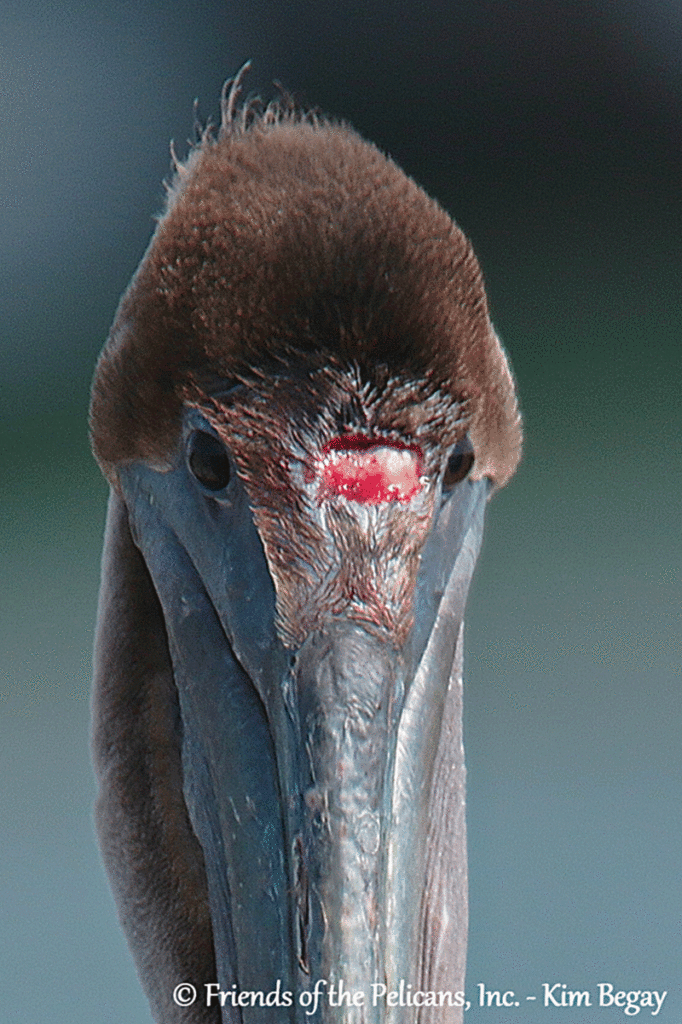
Reports made in mid-February of “scalped” pelicans found at the pier on the south side of the Sunshine Skyway Bridge have exacerbated tensions between fishers and Friends of the Pelicans, a nonprofit group led by Jeanette Edwards that has been stationing a full-time rescuer on the pier since October 2020.
Edwards, who lives near Anna Maria Island, said the group had encountered 16 pelicans with the wound pattern since Jan. 9. Group member Kim Begay told Bay News 9 Feb. 11 that the injuries appeared to be inflicted with a blade, while pier anglers have said they occur when pelicans dive into structure.
The Florida Fish and Wildlife Conservation Commission is investigating.
Justin Perelli, the rescue team manager at Seaside Seabird Sanctuary in Indian Shores, said he had treated about six scalped pelicans over the past year but can’t recollect seeing the wound pattern before that time.
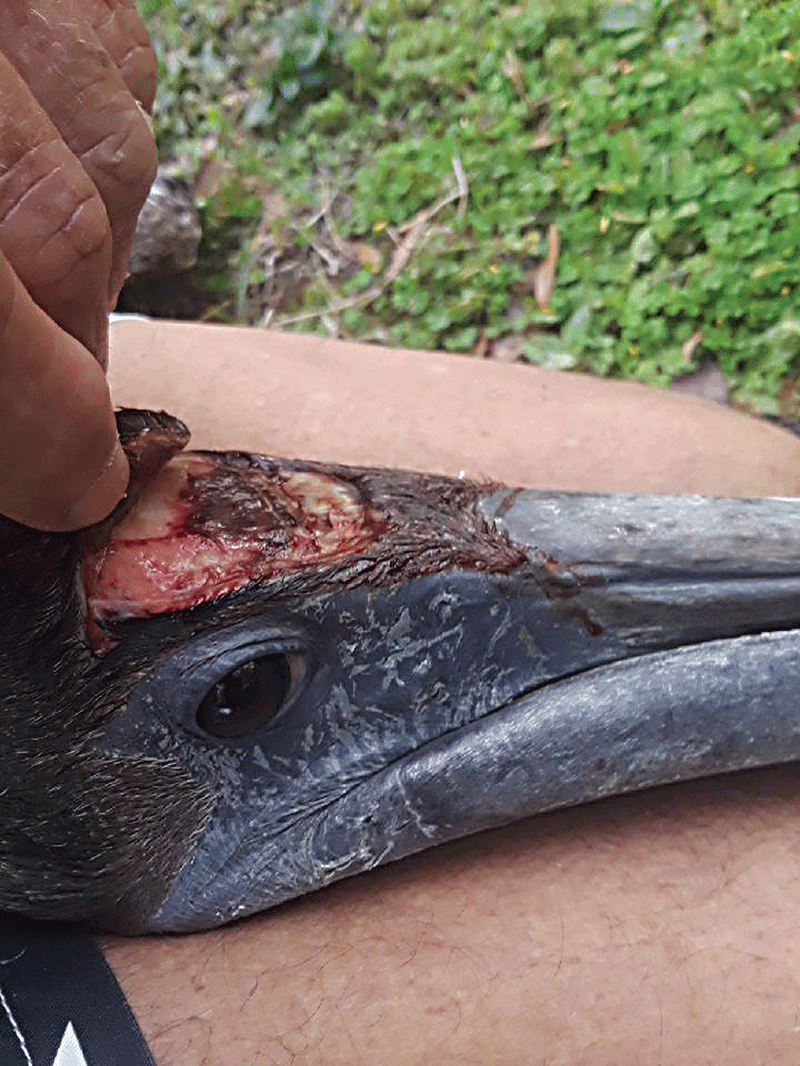
Of the six, he said three could have sustained the injury from flying into something, while the other three appeared to be scalped with a precision instrument.
Edwards brought one of the scalped pelicans to Perelli for treatment Feb. 13.
“It was just a huge laceration and we attribute it to something like a filet knife to the face,” Perelli said. “Medically speaking, it was a precision cut. There’s nothing naturally that would cause a wound like that, in my opinion.”
Pier regulars have said they’ve seen pelicans dive into structure. Some, including Mike Patterson, a rescuer not currently affiliated with the FOTP who has frequented the pier for more than a decade, also have observed the scalped wound pattern.
“These birds, when they are chasing after the bait, they occasionally run into that bridge and I’ve got pictures of them. It basically takes the skin off the top of their heads,” Patterson said. “Pelicans, seagulls, they all do it. They have always done it.”
Following the news reports about the scalped pelicans, conflict between FOTP and pier fishers exploded on social media.
The Pelican friends’ Facebook page was flooded with negative posts, including vulgar commentary and images. Edwards said most of the posts came from members of the Skyway Misfits Fishing Group, a club that regularly meets on the pier to fish and socialize.
“We had to literally ban 20 people,” Edwards said Feb. 15. “It was all really awful.”
On the Misfits’ Facebook page, which has about 6,000 members, numerous posts characterize the Friends’ reports as false accusations leveled to stir up support for the fishing pier’s closure.
“They went on every news platform there is and put out false allegations against us, and now they’re coming out and saying that they’re trying to close these piers,” Jay Cross, founder of the Skyway Misfits Fishing Group, said Feb. 15. “I mean, I’ve fished this pier since I was 10 years old, man. I want my kids to fish this pier; I want my grandkids to fish this pier.”
Many pelicans are hooked overnight, and that’s when some might be facing abuse, Edwards said. She initially advocated for closing the pier at night or posting overnight patrols but has since settled on the latter solution.
“I think with nighttime, the best solution so that people can still fish out there and that we would feel that our pelicans are safe, we would need to have some kind of security,” Edwards said. “Either an FWC officer or a park ranger. And then fishermen, 99% of which are perfectly fine and good people, they could be out there fishing.”
Pelicans injured by fishing activities have been a problem at the pier since it opened in 1994, but FOTP didn’t know how bad the problem was until they employed their full-time rescuer, Edwards said.
“We’ve been getting over 100 birds a week,” she said.
According to anglers, there have been an unusual amount of birds on the pier this winter.
The combination of a bigger pelican brood and the increased presence of rescue groups who use multiple fish to attract injured birds has led to habituation and exacerbated the problem this season, Cross said.
“They’re coming out here on a daily basis, and instead of getting these birds out of danger with one fish, they’re chumming them with 5-gallon buckets of fish,” he said. “They’re training these birds to know that the pier is where you come to get food.”
FOTP rescuers only use a few pieces of bait to attract injured birds, Edwards said.
“It’s the way every rescuer out there has done it since they built that pier,” she said. “We are not creating the problem; the problem is that the birds are being hooked and killed.”
Commercial fishers, who throw cast nets off the pier every day and often dump large numbers of baitfish on the deck and into the water, have a larger impact on bird habituation than rescuers, she added.
Edwards said it hurts to see commentary about FOTP hating anglers on Facebook because, before rescuing birds, fishing was her biggest passion. She taught herself to fish to interact with her sons while they were growing up and she is the godmother of two fishing guides.
“We are genuine,” Edwards said. “We really do only care about the birds. We don’t hate fishermen. I’m a fisherwoman. I have so much respect for fishermen.”
How to help
People with information about seabird injury or abuse can report incidents to the FWC’s Wildlife Alert Hotline at 888-404-3922.