




As we are move through spring break, Anna Maria Island fishers find themselves facing red tide.
We’re discouraged and feeling helpless as we watch our ecosystem being killed by over-population, outdated infrastructure and poor leadership.
If I have to hear about red tide being a natural occurrence one more time, I think I’m going to puke. A bolt of lightning striking a tree in the forest and causing a fire could be considered a natural occurrence. But if someone pours gallons of fuel on it, is it still natural?
I don’t think so.
Isn’t our red tide situation comparable to this scenario?
Sure, red tide naturally exists in the Gulf waters and, during favorable conditions, it can bloom and be destructive to marine life. But with the addition of fertilizer and pesticide run-off, poor sewage systems and inadequate water treatment facilities that leech nutrients, aren’t we adding fuel to the fire?
I mean, c’mon.
How frequent can the red tide blooms be before proper measures can be considered to minimize our impact on fueling this organism?
We know that every time we experience a hurricane on the southwestern coast of Florida, we observe severe red tides stemming from the nutrient-rich waters of Lake Okeechobee being released into the Caloosahatchee, which snakes its way to the Gulf of Mexico.
And we saw a huge bloom active in March 2021 from Piney Point that laid utter devastation to the eastern shoreline of Tampa Bay, causing tons of dead fish to flow westward, clogging the canals and marinas of downtown St. Pete.
Once again, nutrient-rich water interacted with the red tide organism, resulting in a supernova effect.
I’m no scientist, but there seems to be a pattern. I’m curious to see what path we take to realize the impact we’re having on our waters. Hopefully it’ll be for the best and not for the money.
For those of us who live here and can’t imagine being anywhere else, we need to be proud and protect our little paradise. And for the many of out-of-state tags I see with an AMI sticker on them, I think there are more people who would like to pitch in and protect their “tropical hideaway.”
If you’re intrigued, there are numerous organizations providing information, as well as advice that may aid you in understanding the situation, including:
- Captains for Clean Water: captainsforcleanwater.org.
- The Coastal Conservation Association: ccaflorida.org.
And the Facebook group, the South Florida Clean Water Movement.
Improvements will take time and effort but, make no mistake, it’s time to get going.
On my Just Reel charters, I’m seeing an acceptable amount of inshore fish being caught despite having to deal with the uncertainties of red tide.
Fishing the flats where tidal flow is good on the eastern side of Tampa Bay is yielding decent snook catches measuring 20-28 inches.
Spotted seatrout are being caught on deeper grass flats along with some ladyfish and Spanish mackerel.
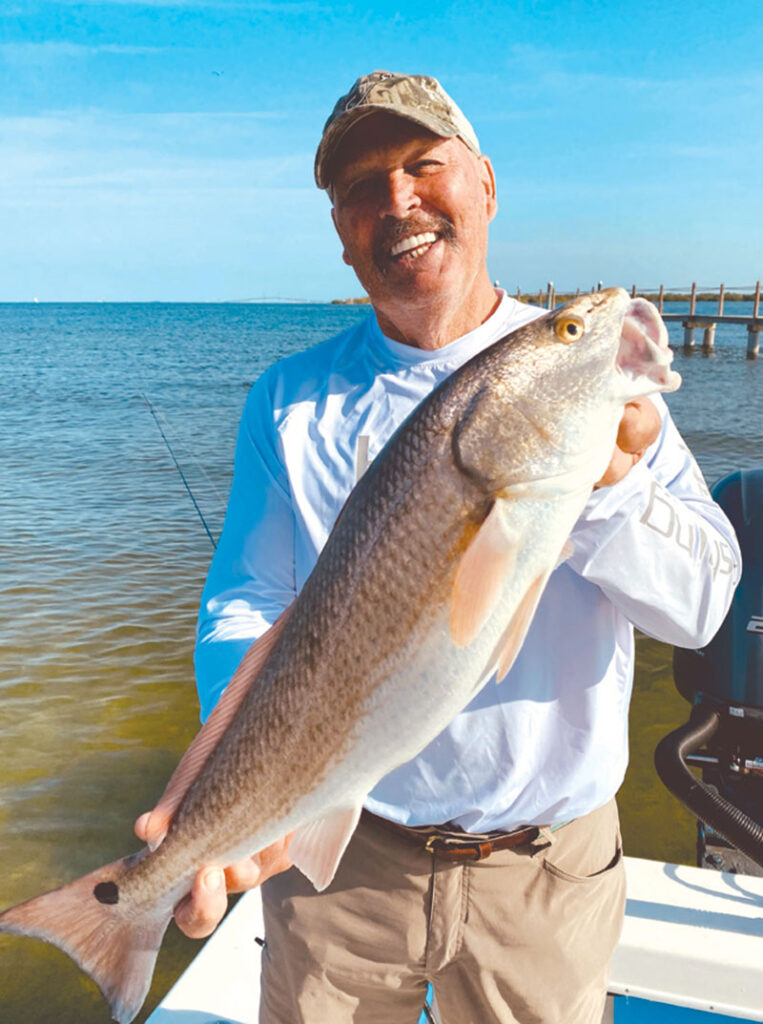
Lastly, I’m picking up a redfish here and there around some docks and on the flats.
Capt. Jason Stock says the African pompano bite is a frequent crowd-pleaser for his charter fishers. Fishing offshore in the Gulf in depths over 100 feet of water, Stock is leading clients to the elusive-yet-sought-after fish. APs in the 30-pound range are being caught on live baits and vertical jigs.
While targeting the pomps, amberjacks are prevalent. In fact, they seem to get in the way, although most anglers are satisfied as the fish put up quite a battle on the hook.
Bottom fishing around structure and hard bottom also is producing action, especially on red grouper. Live baits such as pinfish are working to attract these large predators.
And while bottom fishing, Stock is seeing plenty of vermilion, lane and mangrove snapper.
Finally, blackfin tuna are being caught on the troll and, as a bonus, a sailfish took a hook for Stock this past week.
Capt. David White says while working inshore, he’s seeing a lot of snook take the hook with a live shiner. Casting shiners along mangrove shorelines is even resulting in an occasional redfish.
In deeper areas of Tampa Bay, White is finding Spanish mackerel. By chumming heavily with shiners, he is attracting the high-speed fish around the boat and putting clients to work, casting baits on a long shank hook into the feeding frenzy.
Moving offshore, White says bottom fishing is providing the most action. Red grouper, yellowtail snapper and mangrove snapper are being caught on live pinfish and shiners.
Lastly, while trolling, White hits the bonus run for anglers, who get their thrills by hooking into an occasional blackfin tuna.
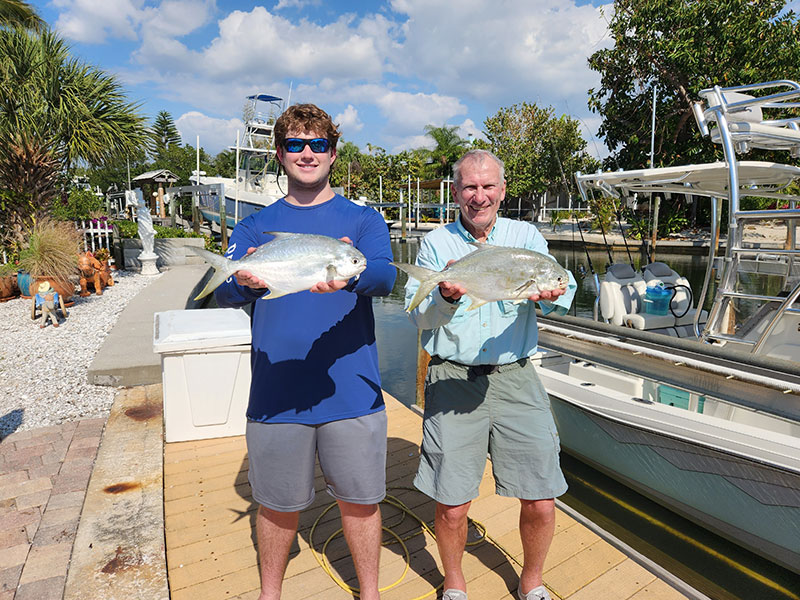
Capt. Warren Girle is spending his mornings fishing the flats of northern Sarasota Bay. In areas where deep grass flats exist, Girle is finding trout. Drifting and jigging is the most effective form to find the action. Spotted seatrout are the most prevalent bite, with ladyfish and mackerel are in the mix. And, as a bonus, pompano are coming to the jig.
Targeting snook and redfish on the shallow flats is an option. For these species, Girle removes the jig and switches to live shiners. Both species are cooperating during swift-moving tides.
Jim Malfese at the Rod & Reel Pier says red tide was present there for a couple of days but the waters are clearing and the fish are back. Sheepshead are being caught by anglers dropping live shrimp around the pilings. Species being caught on shrimp include redfish, black drum and even a couple of snook.
Using artificials such as small jigs and casting them away from the pier is attracting an occasional mackerel, according to Malfese, as well as ladyfish and jack crevalle.
Send high-resolution photos and fishing reports to fish@islander.org.